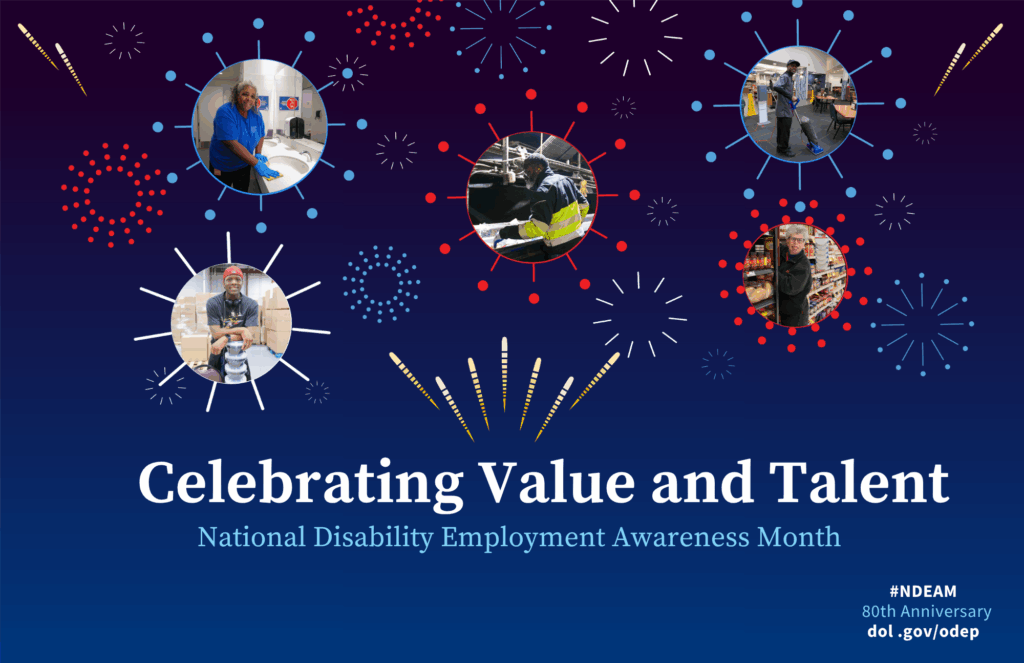
Every October, the same playbook rolls out.
National Disability Employment Awareness Month. NDEAM. That one time a year when agencies and companies race to post glossy graphics and say all the right things about valuing disabled talent.
Here’s the thing: we don’t need a marketing campaign. We need a functioning workplace.
Because while the federal government brands itself as a “model employer,” the reality for many of us doesn’t match the message. Too often, the accommodations process feels less like a conversation and more like a slow-motion extraction.
When things go right, it’s simple. An employee says, “I need this,” and you work together to figure it out. That’s what a healthy workplace looks like. But when leadership wants the optics without the action, the process turns adversarial.
Paperwork is requested. Then more paperwork. Then silence. Then suddenly your performance is under review. Not because anything changed, but because you disclosed. Because you asked for what you need to succeed.
That’s not a problem employee. That’s a problem environment.
And the delays? They do real harm. Earlier this year, a federal court ruling found that a six-month delay in approving a service dog for a public employee may have violated the ADA. The court didn’t just critique the decision. It flagged the delay itself as discriminatory.
People are being worn down by design.
Across the federal workforce, we’re seeing a quiet purge. According to The New Yorker more than 550 disability-related complaints were abandoned after the U.S. Department of Homeland Security dismantled its civil rights office. Agencies are walking back hybrid work and delaying accommodations that used to be routine. Even the EEOC, the agency that enforces disability rights, has seen its own disabled staff pushed to fight for access.
This is not accidental.
When a disabled employee asks for an accommodation, they are not asking for special treatment. They are saying, “I want to keep doing the job you hired me to do.”
But too often, that disclosure is weaponized. Suddenly we’re seen as less capable. Projects are reassigned. Promotions disappear. The same systems that talk about equity on their websites make us jump through hoops to be treated with dignity.
And the real kicker? Most accommodations cost under a hundred bucks to implement. What costs more is burnout. Turnover. Legal fees. And reputational damage.
So let’s talk about what real access looks like.
• It looks like believing people when they say what they need.
• It looks like cutting the red tape that delays support.
• It looks like holding toxic leadership accountable, not promoting them.
• It looks like building trust, not breaking it the moment someone discloses.
And it looks like this: If you're going to call yourself a model employer, act like it.

Blog