
Work is getting faster.
Not everyone is being given a way to keep up.
We tend to build things with the intention of making life easier, more connected, more efficient, and for a while, that’s exactly what happens.
Over time, we start asking different questions about what those systems are doing to us.
I’ve been thinking about that in the context of the recent lawsuits against Meta and the way Lennon Torres at Mashable described growing up on social media as “digital nicotine.” These were tools meant to connect us, but they also changed how we interact, process information, and how much of ourselves we outsource to systems we don’t fully question or understand.
That same tension is starting to show up in how we talk about AI at work. The dominant narrative is speed, efficiency, and output, even as broader analysis from the World Economic Forum has started to warn that these systems may widen the gap between who benefits and who gets left behind.
Most leaders say the design of human-AI interaction matters, yet Deloitte’s latest Human Capital Trends report notes only 6% feel they are actually doing it well.
What I keep coming back to is the difference between using AI to support thinking and gradually or wholly outsourcing thinking to it. Those two can look very similar on the surface, especially in environments that reward speed, but they lead to very different outcomes over time. At a certain point, the tradeoff stops being about efficiency and starts shaping how we collaborate, make decisions, and evaluate work.
As output increases, the space for human judgment, collaboration, and pushback shrinks, and over time that has consequences not just for quality, but for the kind of thinking we bring into our work.
I find myself thinking about this through my own relationship with technology. I’ve always leaned in early, partly out of curiosity and partly because, as someone living with a disability, I’m constantly looking for ways to make systems work better in practice. That instinct to optimize and streamline has real value, and it also makes tradeoffs harder to ignore.
Speed is never neutral. Every system optimizes for something, and in doing so, deprioritizes something else. When speed and output become the primary measure, what often gets deprioritized is the human context that makes work sustainable.
That’s the part that feels most important to pay attention to, not just who gets left behind, but how gradually and quietly that process can happen when speed becomes the primary measure of value.
As we continue to integrate AI into how work gets done, the question that keeps coming up for me is not just what these systems allow us to do, but what kind of work and what kind of participation they are shaping in the process.
Where are you seeing that balance being handled well, and where is it starting to break down?
“Access Isn’t Just a Ramp—It’s a Vibe”: Reflections from the DIAL Conference

Enoch Pratt Central Library in Baltimore, Maryland
There’s something quietly powerful about being invited into a space that’s not only ready to hear you—but ready to evolve.
Huge thanks to Erin Kelly, Alicemarie (AM) Dillon, Liz Sundermann-Zinger, LaShawn Myles, and the entire Enoch Pratt Free Library & Maryland State Library Resource Center team for making that kind of space real during today's DIAL Conference. You didn’t just host an event—you created an environment that invited candor, trust, and reflection. And that matters more than most people realize.
As a disability advocate and speaker, I’ve shared stages across the country—but rarely with a team as committed, prepared, and intentional as this one. From the AV folks to the captioners to the people behind the chat box making everything flow, your work didn’t go unnoticed. It made the keynote possible.
One of the things I said during our conversation was:
“Access isn’t just a ramp—it’s a vibe.”
What I meant is this: real accessibility shows up in the tone of the welcome, the thoughtfulness of the planning, and the way people respond when someone says, “Here’s what I need.”
When I was working with my former service dog, Canine Companions® Pico—and now with Lovey, my current partner—I’ve learned that access isn't just about logistics. It’s about feeling expected instead of inspected. It’s about being able to show up without having to justify your presence.
That’s the difference between a place that accommodates and a place that includes.
We covered a lot in our fireside chat: from ADA as the floor—not the ceiling—to the ways intersectionality demands we design for full, complex lives. We talked about emotional access, ally fatigue, and the quiet power of believing someone the first time they ask for support.
And the questions from the audience? Thoughtful, brave, and forward-thinking. That’s what gives me hope.
Thank you for showing up. Not just in the chat or in the session—but in the work.
Let’s keep pushing. Keep building. Keep asking:
➡️ Who’s not in the room, and why?
➡️ How do we make access cultural, not just procedural?
➡️ What does true welcome look and feel like?
If you joined the session, I’d love to hear: what are you taking back to your branch, your office, your community?
And if you didn’t catch it—don’t worry. This conversation is just getting started.
The Goldilocks Dilemma: Navigating Disability Representation in the Workplace
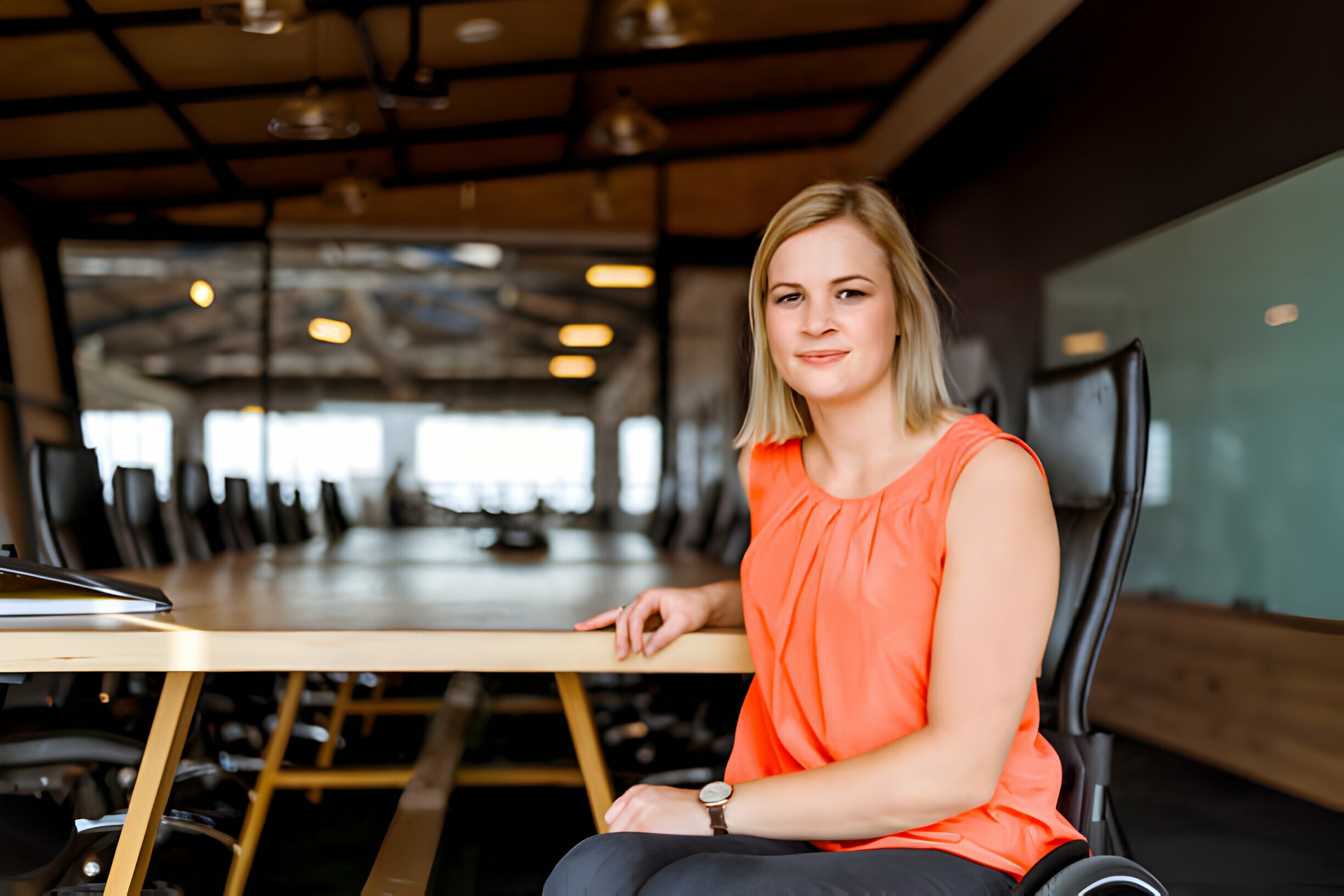
A photo of confident businesswoman sitting on wheelchair. Portrait of confident female professional is in board room. She is in smart casuals at creative office.
In the realm of business, the dialogue around disability inclusion often mirrors a well-rehearsed play: grand declarations of commitment to diversity, equity, and inclusion (DEI) are made, yet the curtain falls before any meaningful action takes place. This dissonance between words and actions reveals a profound misunderstanding of what authentic disability representation entails. It's not just about filling quotas or showcasing diversity for marketing purposes; it's about fostering an environment where every individual, regardless of their abilities, can thrive.
The concept of the "Goldilocks nature of disability" in the workplace is a testament to this misunderstanding. On one hand, individuals perceived as "too disabled" are often overlooked, based on the erroneous belief that they will require excessive accommodations or will not be as productive. On the other hand, those who excel, thanks to necessary accommodations, face skepticism and accusations of exploiting their disability for benefits like telework. This paradox highlights a glaring issue: many companies want disabled employees to be just disabled "enough" to benefit the company's image but not so much that understanding and meeting their needs becomes a priority.
Caroline Casey, in her Forbes article, underscores the imperative of authentic disability representation noting, "Piecemeal efforts like basic accessibility compliance or tokenistic representation fail to shift norms: what’s needed is a seismic culture change in how disability representation is understood and embedded across organizations from media and marketing to product design and accessible retail spaces." This sentiment is echoed in the recent initiative by Starbucks, as reported by Axios, where the opening of their accessible store in Union Market is not just a nod to accessibility but a step toward setting new standards in how businesses can and should integrate accessibility into their core operations.
However, as someone who has advocated for accessible entrances at my local Starbucks for nearly a decade, with success only coming in January 2024, I can't help but view this development with a mix of appreciation and irony.
True inclusion requires a shift in mindset—from viewing accommodations as a burden to seeing them as an investment in a diverse workforce reflecting the world we live in. It's about recognizing that every employee brings a unique set of skills and perspectives that, when harnessed, lead to innovation and growth.
As we navigate the complexities of disability inclusion, let us challenge ourselves and our organizations to move beyond performative actions. Let's commit to listening, learning, and adapting. Let's strive for a workplace where everyone is not just accommodated but truly included and valued.
Authentic Disability Representation Is A Business Imperative