Accessible Workplaces

Remote Work Is a Lifeline for Disabled Workers. Why Are Leaders Still Ignoring That?

A person types on a laptop at an outdoor table. Only their hands and forearms are visible. A takeaway coffee cup sits nearby, and sunlight casts strong shadows across the green tabletop.

I’ve always said remote work kept my career sustainable long before COVID made it acceptable. That part gets lost. Remote work didn’t appear in 2020. It only became socially acceptable when everyone needed it.

That says something about disability.

When disabled people ask for something, it becomes a special exception.
When the majority needs the same thing, it becomes innovative and essential.

Now here we are in 2025, watching companies announce return-to-office requirements in the guise of “team spirit” and culture. The Wall Street Journal points to concerns about learning, innovation, and collaboration slipping in hybrid environments. A recent article from YourTango noted a worker quitting in the middle of a meeting when HR told them that rising commuting costs were simply the price of being a team player.

Let me tell you what team spirit looks like from my reality.

It is pouring rain. My wheelchair has powered components that cannot get soaked. Canine Companions® Lovey is with me and I am responsible for her safety. The “just grab an umbrella” solution that non-disabled people rely on is not an option. Something as routine as weather can dismantle an entire workday before it starts.

Or I’m relying on the Washington Metropolitan Area Transit Authority (WMATA). One broken elevator is enough to shut down my commute completely. That happened often when I lived in DC. None of this is about drama, it’s the reality of disability few recognize.

Remote work gives me the ability to spend my energy on the job you hired me to do. Without it, I burn through that energy just getting to the building. At home, I can manage chronic pain, sensory triggers, migraines, ADHD, and all the other invisible mechanics of disability without performing them in front of coworkers who don’t know how to respond.

People tell me disability makes them uncomfortable when it is visible. The same people often insist that remote work does not count as real work. That contradiction is impossible to ignore.

If you want genuine team spirit, here is where it starts:

1. Believe disabled employees when we tell you what we need.
2. Treat accommodations as responsibilities rather than obstacles.
3. Write policies that include disabled voices from the beginning.

Disabled employees are putting in extraordinary effort every single day. We are often working three times as hard for half the credit within systems that were not built to include us. And we still deliver.

So the question I keep coming back to is simple:
Why are we still having this conversation in 2025?

What Happens When Accessibility Is Built In Instead of Bolted On?

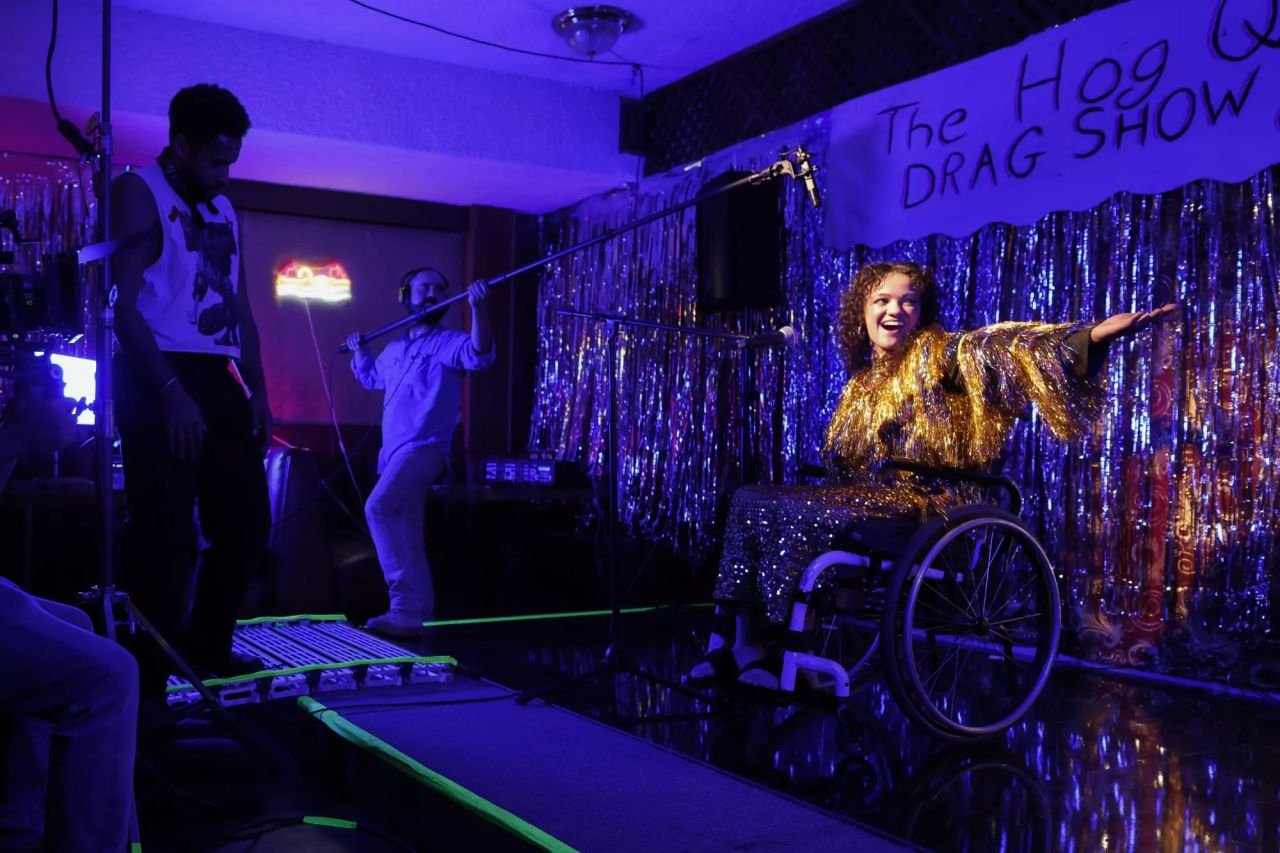
Marissa Bode performs during a take of Katherine Craft’s film “The Hog Queen,” filmed this summer in Van Nuys.

(Carlin Stiehl / Los Angeles Times)

Imagine asking a hiring manager in the middle of a job interview, “What’s your line-item budget for accessibility?”
And then just… watching their face.

Most people wouldn’t know what to do with that question. They’ve never had to think about it.

That’s what struck me reading about The Hog Queen in the Los Angeles Times this morning, a short film backed by the Inevitable Foundation, where access wasn’t an afterthought. They made it part of the plan, and wrote into the budget as part of the expectation.

And I thought: what if that was true in every workplace?

I’ve worked in spaces where access was built in, and I’ve worked in ones where it wasn’t. You can feel the difference in your body. When I don’t have to fight for access, when I’m not mentally running through who to email or what barrier to fix, I end the day with energy left to actually do my job. I can lead, I can build, and I can advocate for others instead of just surviving the space I’m in.

That’s what accessibility done right does. It multiplies energy, and turns it into impact.

Yet we keep treating it like a favor to negotiate after the offer’s signed.

Here’s the truth. Most accommodations cost less than $100. What’s expensive is losing good people because a workplace couldn’t be bothered. You don’t save money by skipping access. You just spend more replacing the people you burned out.

If you’re in leadership, start here:

✅ Ask your employees what they need.
✅ Trust them.
✅ Budget for it.
✅ And make it standard.

If you really want to know what your organization values, look at your budget.
If accessibility isn’t on the ledger, it’s not in your culture.
Accessibility should be as normal as a lunch break.
As obvious as a door that opens when you push it.
Show me your budget, and I’ll show you your values.

Remote Work Isn’t a Perk—It’s a Lifeline for Disabled Federal Employees

People walking past the Department of the Treasury building, a historic structure with large columns and engraved signage, on a chilly day with some leaves scattered on the ground.

For more than a decade as a federal employee, I’ve been proud to serve the public. I’ve earned awards, glowing reviews, and built a career I love. But here’s the truth: my success wouldn’t have been possible without telework. As a disabled professional managing multiple disabilities, remote work is more than a convenience—it’s a lifeline. It enables me to thrive in an environment that meets my needs and eliminates barriers that might otherwise exclude me. Now, all of that progress is at risk.

The Wall Street Journal's John McCormick and Te-Ping Chen report on the newly envisioned Department of Government Efficiency effort to mandate full-time in-office work is alarming. Elon Musk and Vivek Ramaswamy, leading this charge, have made it clear that they expect resignations, with Ramaswamy predicting as many as 25% of federal workers could leave. To them, this might sound like trimming bureaucracy. In practice, this is a targeted assault on equity and inclusion.

Telework gave disabled employees the chance to participate in record numbers, eliminating barriers like long commutes and inaccessible environments. Meg O'Connell, PHR of Global Disability Inclusion, LLC explained it best to HR Brew ™️'s Kristen Parisi: “People with disabilities have what they need in their homes. They don’t have to ask for accommodation [because] they’ve already built out their space.” Why dismantle a system that works?

While many argue in-person work fosters collaboration, the private sector is proving otherwise. Glassdoor’s CEO Christian Sutherland-Wong told Fortune, “The biggest benefit we’ve seen…is being able to tap into talent all around the U.S. and the globe.” If companies like Glassdoor see remote work as a future-driven solution, why is the government pushing outdated practices?

This isn’t just about where we work; it’s about who gets to work. Forcing disabled employees back into offices undermines principles of diversity, equity, inclusion, and access. Policies like DOGE’s mandate send a clear message: “We don’t trust you or value your contributions unless we see you at a desk.” As Dannie Lynn Fountain, DBA, EA, SPHR, CDR of Google said, these practices are “still disability discrimination.”

The pandemic proved remote work’s transformative potential. It shattered barriers for disabled workers and redefined productivity. Now, that progress is being reversed. The stakes couldn’t be higher—not just for me but for all of us. Are we building workplaces of the future or clinging to systems that exclude?

Remote work empowered me to thrive, but it also redefined what’s possible for our workforce. Let’s not let fear of change erase that progress. Inclusion is more than a checkbox; it’s a commitment to creating workplaces where everyone can succeed.

Musk, Ramaswamy Want Federal Workers in the Office Full Time. There’s a Hitch.

Leading by Example: The Power of Allyship in Disability Inclusion

A line graph shows the steady employment rate for people with disabilities trending upward from 2010 and reaching record highs in 2023.

The landscape of disability employment is experiencing a transformative shift, marking an era of significant progress and inclusivity. Axios' Emily Peck reports a record 22.5% of people with disabilities were employed in 2023, reflecting a strong labor market and the empowering role of remote work. This transition is not merely an adjustment to a post-pandemic world; it represents a broader move toward genuine inclusivity, affirming that remote work is a crucial enabler for those traditionally marginalized in the employment sector.

Key Insights:

• The Bureau of Labor Statistics reports an increase in the disability rate among Americans to 12.5% in 2023, up from 11.7% in 2019.
• Labor force participation for disabled men and women has notably increased since 2019, highlighting a shift toward greater inclusion.
• Despite these gains, the unemployment rate for disabled workers was 7.2%  — about twice what it was for non-disabled workers, indicating persistent challenges in achieving full employment equality.

The expansion of the Disability Equality Index (DEI) to include more countries, as highlighted by HR Brew ™️’s Kristen Parisi, signals a growing global commitment to disability inclusion. Jill Houghton, president and CEO of Disability:IN, emphasizes the significance of senior leaders who "either openly identified as having a disability or being an ally for people with disabilities," illustrating that authentic leadership can catalyze profound organizational change.

Disability Employee Resource Groups, supported by the C-suite, are instrumental in fostering an inclusive work environment. These groups exemplify how investment in disability inclusion not only enhances corporate culture but also taps into a vast source of talent and market opportunity.

As we navigate the future, the journey toward disability inclusion will require a blend of innovative employment practices, committed leadership, and vibrant community engagement. By championing these changes, we can create workplaces where everyone, regardless of their abilities, can thrive.

Employment rate for Americans with disabilities reached record high in 2023

The Goldilocks Dilemma: Navigating Disability Representation in the Workplace

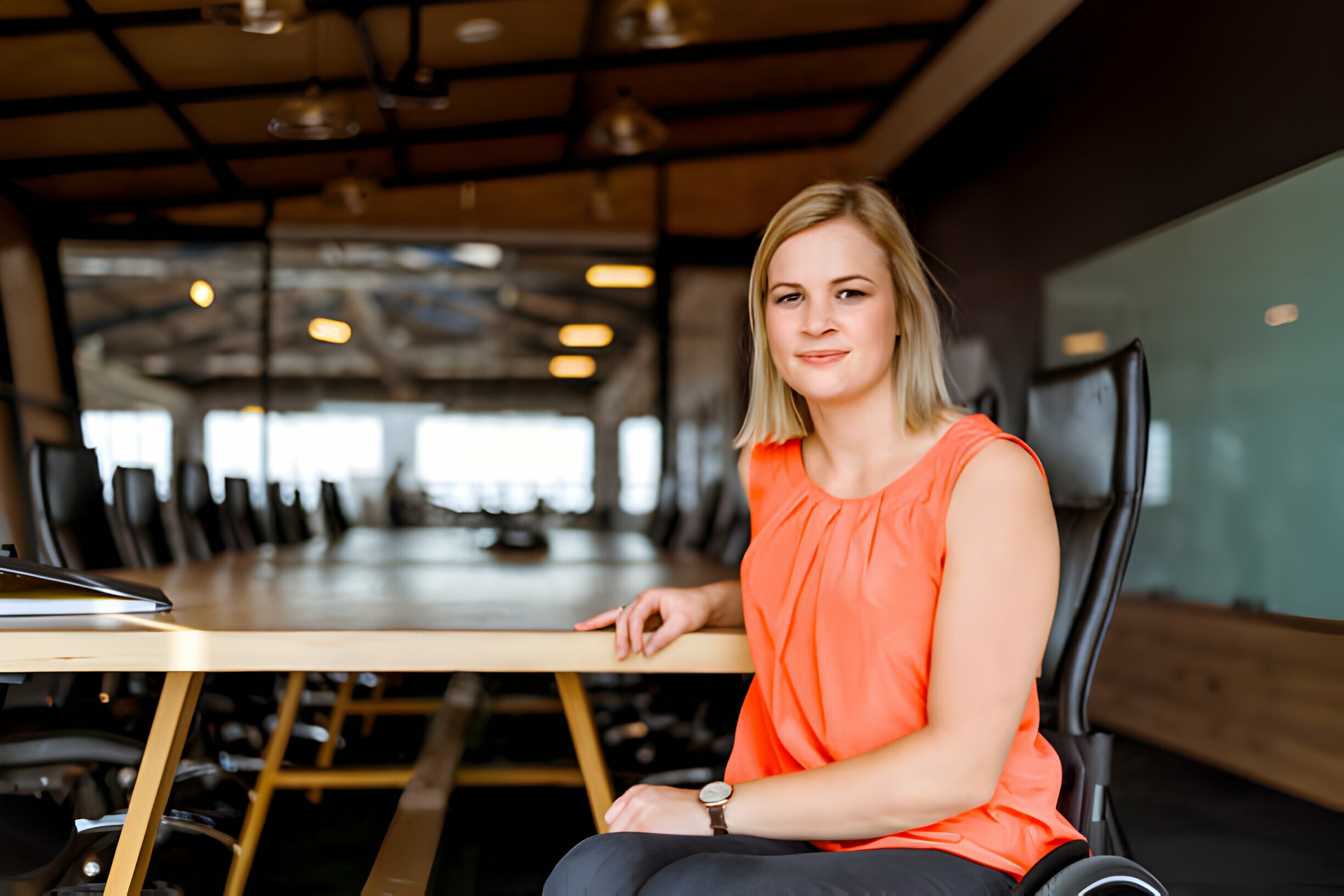
A photo of confident businesswoman sitting on wheelchair. Portrait of confident female professional is in board room. She is in smart casuals at creative office.

In the realm of business, the dialogue around disability inclusion often mirrors a well-rehearsed play: grand declarations of commitment to diversity, equity, and inclusion (DEI) are made, yet the curtain falls before any meaningful action takes place. This dissonance between words and actions reveals a profound misunderstanding of what authentic disability representation entails. It's not just about filling quotas or showcasing diversity for marketing purposes; it's about fostering an environment where every individual, regardless of their abilities, can thrive.

The concept of the "Goldilocks nature of disability" in the workplace is a testament to this misunderstanding. On one hand, individuals perceived as "too disabled" are often overlooked, based on the erroneous belief that they will require excessive accommodations or will not be as productive. On the other hand, those who excel, thanks to necessary accommodations, face skepticism and accusations of exploiting their disability for benefits like telework. This paradox highlights a glaring issue: many companies want disabled employees to be just disabled "enough" to benefit the company's image but not so much that understanding and meeting their needs becomes a priority.

Caroline Casey, in her Forbes article, underscores the imperative of authentic disability representation noting, "Piecemeal efforts like basic accessibility compliance or tokenistic representation fail to shift norms: what’s needed is a seismic culture change in how disability representation is understood and embedded across organizations from media and marketing to product design and accessible retail spaces." This sentiment is echoed in the recent initiative by Starbucks, as reported by Axios, where the opening of their accessible store in Union Market is not just a nod to accessibility but a step toward setting new standards in how businesses can and should integrate accessibility into their core operations.

However, as someone who has advocated for accessible entrances at my local Starbucks for nearly a decade, with success only coming in January 2024, I can't help but view this development with a mix of appreciation and irony.

True inclusion requires a shift in mindset—from viewing accommodations as a burden to seeing them as an investment in a diverse workforce reflecting the world we live in. It's about recognizing that every employee brings a unique set of skills and perspectives that, when harnessed, lead to innovation and growth.

As we navigate the complexities of disability inclusion, let us challenge ourselves and our organizations to move beyond performative actions. Let's commit to listening, learning, and adapting. Let's strive for a workplace where everyone is not just accommodated but truly included and valued.


Authentic Disability Representation Is A Business Imperative