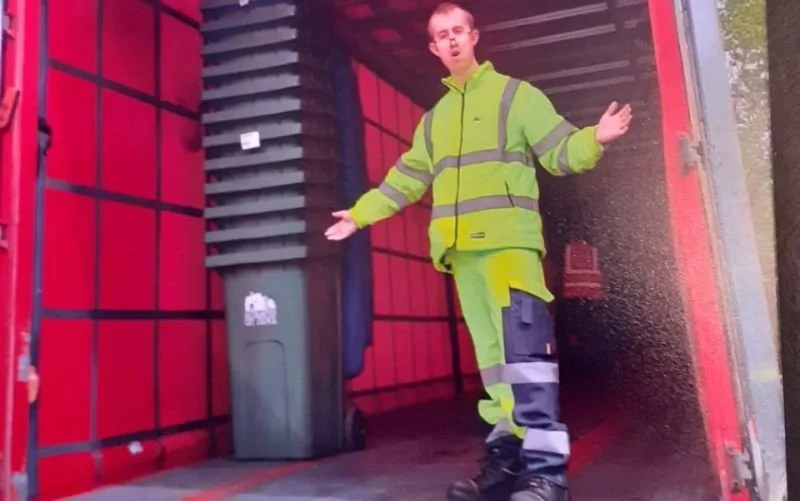
Bryan Rowe seen working at his internship at a waste management company.
A disabled worker spent nine months doing unpaid work and still didn’t get the job.
He did everything right, and still got rejected. Twice.
He walked away thinking he wasn’t good enough. That part hit me immediately. Because I’ve lived a version of it.
Early in my career, I took unpaid internships trying to build something out of nothing. Showing up, doing whatever was asked, hoping that if I proved myself enough, stayed long enough, it would turn into something real.
Sometimes it didn’t.
I remember what that felt like. Watching something you invested in just… stop. No explanation that made sense. No clear path forward. Just the quiet realization that effort alone wasn’t going to change the outcome.
And when you’re starting out, it’s easy to turn that inward. To assume you’re the problem. That you just don’t understand how things work yet.
This isn’t rare.
I’ve seen this happen in different places, in different ways, across roles and organizations.
People show up, do the work, prove they can contribute. And then the opportunity ends right before it becomes employment.
It’s a pattern. And for disabled workers, that pattern hits harder.
We’re already navigating systems that weren’t built with us in mind. We’re adapting constantly just to show up and do the same job.
So when someone does exactly what they’re asked to do, proves they can contribute, and still doesn’t get the job, it sends a message that sticks.
You can do everything right and still not be chosen.
Disabled people are not free labor.
We are not here to make your organization look inclusive without actually being included. We’re here to work, contribute, and build careers.
Disabled professionals bring perspective most organizations don’t have. We solve problems differently because we’ve had to. We see gaps because we’ve lived in them.
And when you leave that out, it doesn’t just impact us. It limits you.
A lot of people will read stories like this and focus on the individual. They’ll say he’ll be fine. That he’ll land somewhere better.
Maybe he will. But this isn’t about one person.
This is about a system where “opportunity” often stops right before it becomes employment.
And it happens more often than people think.
So I’ll ask this:
If your organization offers internships or entry-level roles, what do they actually lead to?
Because if there’s no real path forward, it’s not opportunity.
It’s unpaid labor with better branding.