
Travel With Disabilities

Why Being Disabled Is Not A Travel Hack

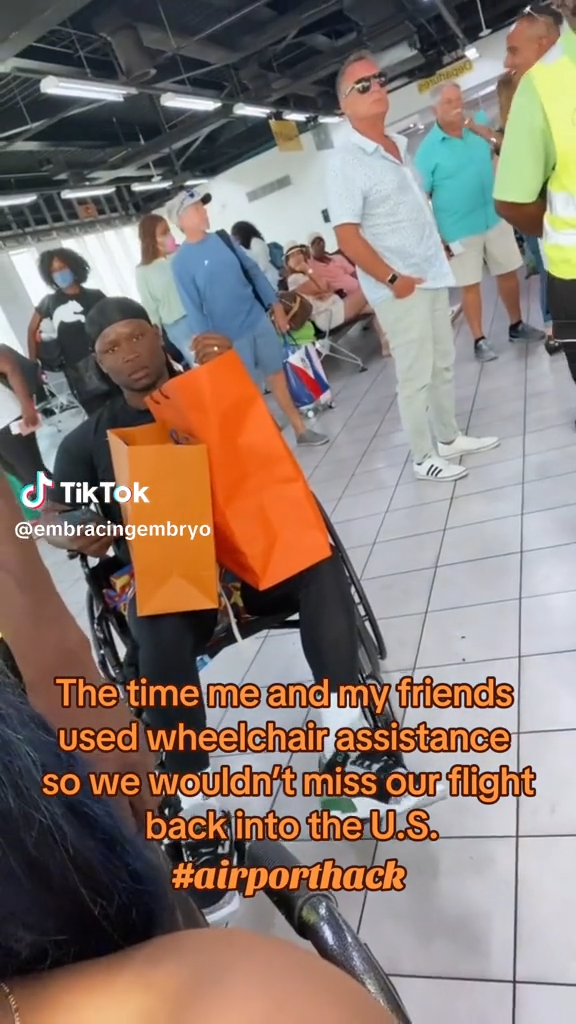
Freeze frame of a TikTok video with the caption “The time me and my friends used wheelchair assistance so we wouldn’t miss our flight back into the U.S.”

Happy 2026. Feeling pumped?

Everyone’s doing their New Year reset. “We’re gonna be better.” And disabled people are waking up to TikTok's about how being disabled is a travel hack and The Wall Street Journal highlighting the miracle of ‘Jetway Jesus.’

Being disabled is not travel hack. Flying while disabled is exhausting. It’s dehumanizing. It’s expensive. And it’s layered in ways most people never have to think about.

When I travel, I don’t just show up with a boarding pass. I travel with a wheelchair, and a printed, double-sided one-sheet I hand to every gate agent explaining how to handle it. Because I’ve answered the same questions a thousand times, and I’m tired of watching people guess with equipment my body depends on.

I travel with my service dog, Canine Companions® Lovey. Which means paperwork. Digital copies. Physical copies. Backups for the backups. Because I never know who’s going to demand proof, or what form of proof will suddenly be “required” today.

That’s before I even get to my body. The pain, the fatigue. the logistics. Whether my girlfriend is with me to help. What if something breaks? Will anyone listen? Just how tired am I going to be by the time we land? How much longer am I waiting to deplane? I’ve been sitting for hours with non-accessible airplane bathrooms.

So when I see people openly bragging about faking disability for pre-boarding or using their platforms to call it a “hack”, my brain short-circuits.

This feeds a narrative disabled people have been fighting forever:
• we’re exaggerating.
• we’re gaming the system.
• we need to be watched.

And yes—non-visible disabilities are real. They are valid. We should never be policing people who need assistance but don’t “look disabled enough.”

This is people who know they don’t need it, saying so out loud, and monetizing it for clicks. And the fallout lands on us.

On the scrutiny when someone like me stands up out of a wheelchair.
On the unspoken question: Are you faking it?

So we over-perform legitimacy. We carry more documentation. We explain more than we should. We make ourselves calmer, nicer, because access feels conditional.

I don’t want to spend my energy explaining why basic decency is required.

I want to spend it reminding people that disabled folks matter. That we’re not inspiration. Not content. Not a punchline. Not a workaround.

We’re just people trying to get where we’re going.

If this is how we’re starting 2026? Arguing about whether disability is being “abused”—then yeah. I’m frustrated. And I’m not interested in pretending this is cute or funny.

So I’ll ask this instead:

Who gets believed?
Who gets blamed when systems fail?
And why is disabled existence still treated like an inconvenience people feel entitled to exploit?

Sit with that.

Why Lying About Disability Hurts Everyone

Silhouetted wheelchair user navigating through a bustling airport terminal during sunrise or sunset, with warm golden light streaming in from large windows ahead. The reflection of the light creates a glowing effect on the polished floor. Other travelers with luggage are blurred in the background, adding a sense of motion and activity to the scene.

Thanksgiving this year marked a bittersweet milestone for me: my first flight since the passing of my service dog, Canine Companions® Pico. Navigating air travel without his steadying presence was an emotional adjustment, but it also brought a new set of challenges to the forefront—ones I hadn’t anticipated as a wheelchair user.

Picture this: It’s the early hours of the morning, and I’m at DCA, waiting to board my flight to Seattle. Between navigating Transportation Security Administration (TSA) Pre-check, managing my luggage, and coordinating the safe onboarding of my wheelchair, I was already juggling more than most travelers might consider. And then came the questions.

The heightened interest in the mechanics of my Alber GmbH power-assist wheels meant fielding inquiries from airline staff who were understandably curious about the technology I rely on for mobility. Half-asleep and longing for coffee, I found myself explaining the specs of my chair like I was pitching a new gadget on Shark Tank ABC.

The lesson I learned? Preparation is survival. Much like I once traveled with paperwork to verify Pico’s working status, I now carry a one-page cheat sheet detailing everything about my wheelchair frame and wheels. It’s a necessity for safety reasons, and because of the pervasive scrutiny many disabled travelers face—scrutiny amplified by dishonest actions like those described in a recent viral story.

A passenger on a United Airlines flight tried to exploit early boarding by claiming he had a disability due to recent knee surgery. However, his actions unraveled when he requested a seat in the exit row, where passengers must confirm their ability to assist in emergencies—something Federal Aviation Administration regulations prohibit for people with certain disabilities. Faced with the choice of admitting he lied or forfeiting the coveted exit row seat, he indignantly claimed he was suddenly "fine" to sit there after all.

When individuals fake disabilities, it undermines the trust needed for systems like pre-boarding to work. Those of us with legitimate needs find ourselves subjected to greater scrutiny. Additionally, exploiting accommodations reinforces the false idea that they’re perks instead of rights—conveniences to be gamed rather than tools for equity. This attitude chips away at the dignity of those who rely on these systems. Disability is not a monolith, but one thing unites us: the barriers we face are real. Every "clever hack" or deception makes the rest of us pay a higher price, emotionally, physically, and logistically.

We, as a society, must do better. We must normalize empathy over suspicion and remember that accessibility isn’t just a checkbox on a corporate DEIA plan—it’s a commitment to dignity, inclusion, and equity for all.

Planning to lie about a disability to get early boarding? Read this