Disability Employment

AI Is Changing the Future of Work. Disabled Workers Already Know What That Feels Like.

A large robotic hand lifts a small human figure in a suit by the back of his jacket and drops him toward a wire wastebasket filled with crumpled paper. The background is a flat bright blue.

Everywhere I look, people seem afraid of becoming irrelevant thanks to AI.

Disabled people know that feeling better than anyone. We've lived in that tension our entire lives. Alice Wong called us the oracles. She was right. We learned to read the world differently because the world was never built with us in mind.

AI can close the gap or blow it wide open. I see signs of both already.

On one hand, technology has always been the thing that lets me move through a world that was not designed for my body or my needs. Uber, Instacart, Amazon, remote work, every one of these tools expanded my independence. AI has joined that list. It sharpens my thinking, helps me get unstuck, and pushes me to see ideas from angles I might have missed. It never replaces my judgment, but it challenges me in a way that feels useful.

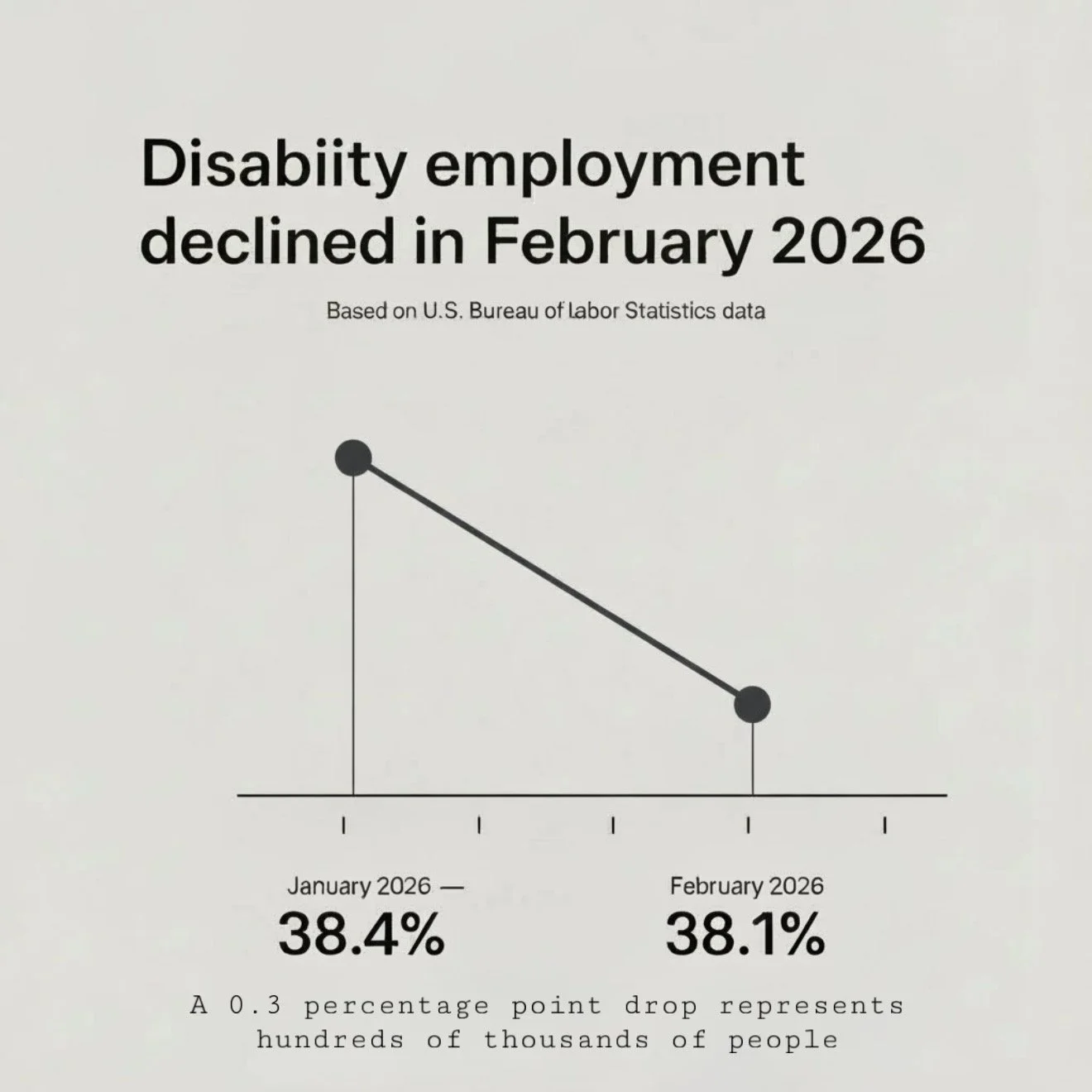
While the tools have improved, the system around them has not. Disabled unemployment is at 8.7%, still nearly twice the national average according to the latest jobs report from the Bureau of Labor Statistics. That's partially due to AI-driven hiring systems screening out candidates before a human ever sees a résumé. Systems built on training data that rarely includes disabled people. They are shaped by teams who often do not understand disability, workplace bias, or accessibility in practice. When the ground shifts, we tend to be the first ones hit.

I want people to understand that AI is neither miracle nor menace. It is a force multiplier amplifying whatever framework you build around it. If the framework is inequity, then inequity scales. If the framework is access, then access grows.

The real danger is creating the future of work without the people who need these tools the most.

What are you noticing in the workplace as AI becomes part of your workflow?

What Happens When Accessibility Is Built In Instead of Bolted On?

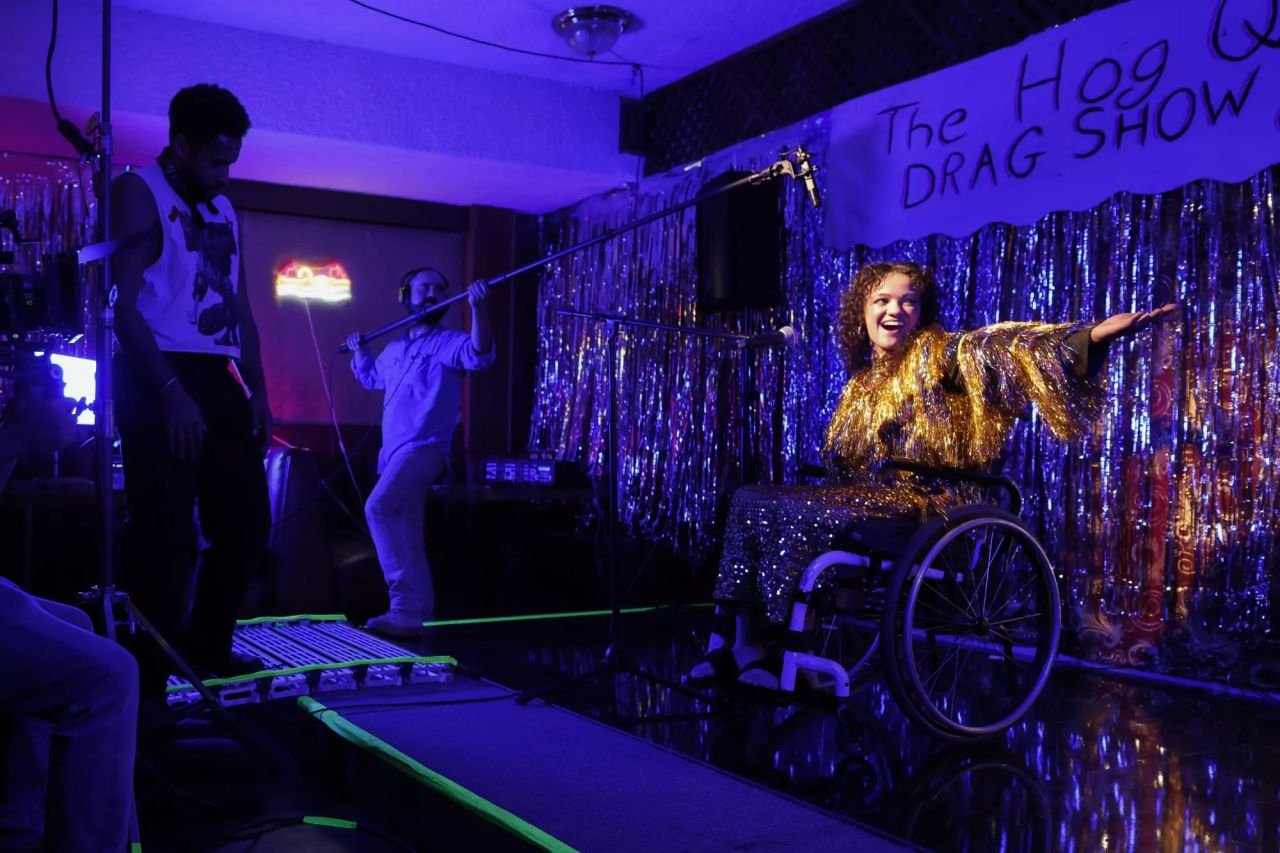
Marissa Bode performs during a take of Katherine Craft’s film “The Hog Queen,” filmed this summer in Van Nuys.

(Carlin Stiehl / Los Angeles Times)

Imagine asking a hiring manager in the middle of a job interview, “What’s your line-item budget for accessibility?”
And then just… watching their face.

Most people wouldn’t know what to do with that question. They’ve never had to think about it.

That’s what struck me reading about The Hog Queen in the Los Angeles Times this morning, a short film backed by the Inevitable Foundation, where access wasn’t an afterthought. They made it part of the plan, and wrote into the budget as part of the expectation.

And I thought: what if that was true in every workplace?

I’ve worked in spaces where access was built in, and I’ve worked in ones where it wasn’t. You can feel the difference in your body. When I don’t have to fight for access, when I’m not mentally running through who to email or what barrier to fix, I end the day with energy left to actually do my job. I can lead, I can build, and I can advocate for others instead of just surviving the space I’m in.

That’s what accessibility done right does. It multiplies energy, and turns it into impact.

Yet we keep treating it like a favor to negotiate after the offer’s signed.

Here’s the truth. Most accommodations cost less than $100. What’s expensive is losing good people because a workplace couldn’t be bothered. You don’t save money by skipping access. You just spend more replacing the people you burned out.

If you’re in leadership, start here:

✅ Ask your employees what they need.
✅ Trust them.
✅ Budget for it.
✅ And make it standard.

If you really want to know what your organization values, look at your budget.
If accessibility isn’t on the ledger, it’s not in your culture.
Accessibility should be as normal as a lunch break.
As obvious as a door that opens when you push it.
Show me your budget, and I’ll show you your values.

Inclusion Isn't A Debate: Why SHRM Got It Wrong

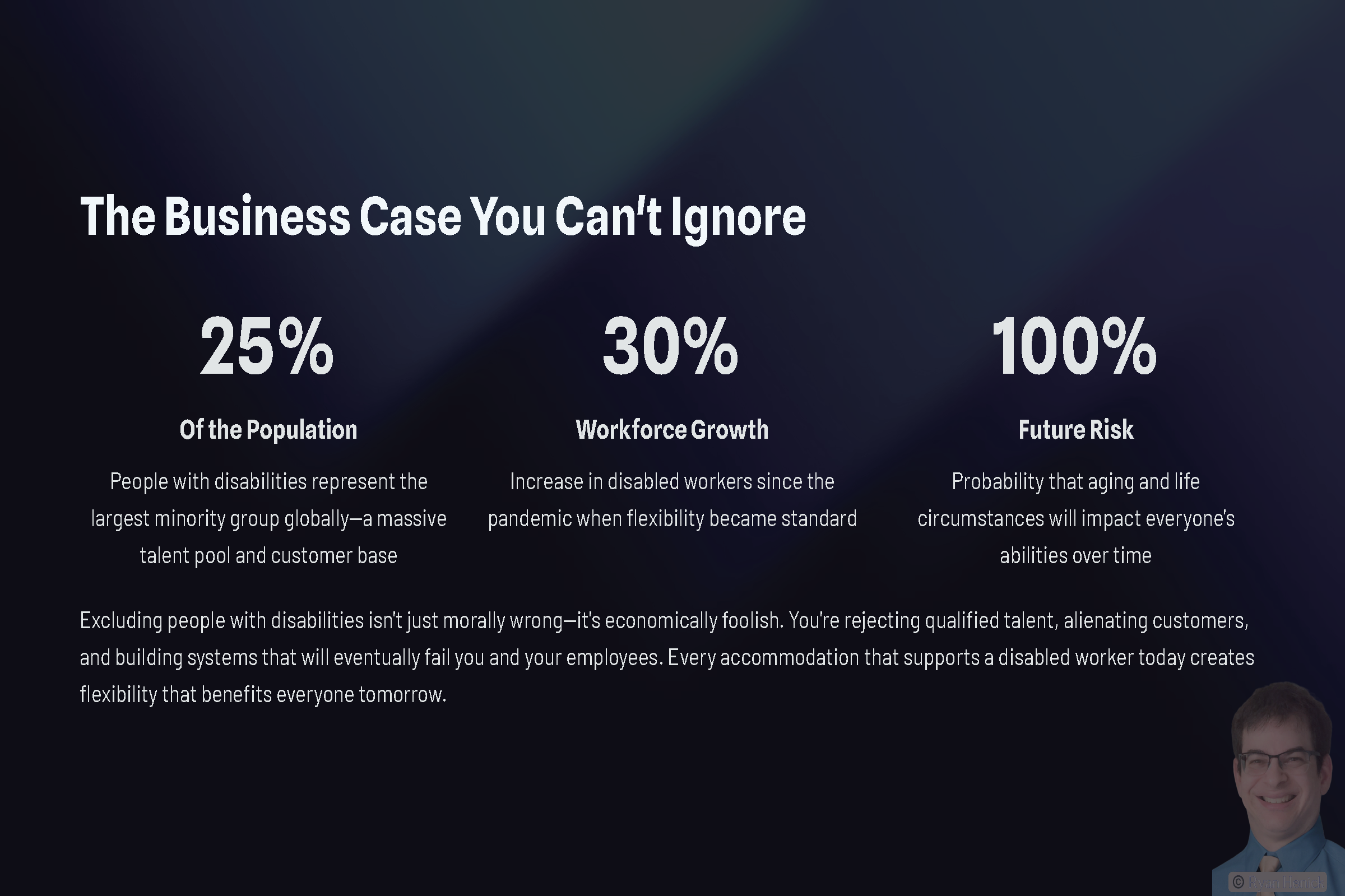
Slide titled ‘The Business Case You Can’t Ignore’ showing three statistics on disability inclusion: 25% of the population are people with disabilities, 30% workforce growth among disabled workers since the pandemic, and 100% future risk that aging or life circumstances will affect everyone’s abilities.

Inclusion isn't optional. Shocking I know.

We make up 25% of the population. We’re the largest minority in the world, and yet, every time a company “forgets” to plan for us, it’s not an oversight. It’s a decision. It’s saying: we don’t care to include a quarter of humanity.

And if you live long enough, disability will find you.

I joke sometimes that it’s like a mafia threat. “it’s coming for you.” But it’s true. We are all just temporarily pre-disabled. So when organizations treat inclusion like an experiment instead of a responsibility, what they’re really doing is gambling against their own future selves and interests.

That’s what makes the latest headlines so maddening.

Shaun Heasley, writing for Disability Scoop cites a report from SHRM noting workforce participation for people with disabilities is up 30% since the pandemic. Wendi Safstrom, president of the SHRM Foundation, calling it “a testament to what’s possible when organizations commit to inclusion and flexibility.”

She’s right. Remote work gave us the ability to get things done without burning half our energy fighting the world just to show up.

And somehow, in the same breath, SHRM handed the microphone to Robby Starbuck, a man who calls DEI “poison” and takes credit for dismantling inclusion programs at major corporations including Ford Motor Company, Harley-Davidson Motor Company, and Walmart. [H/t caroline colvin per HR Dive.]

Platforming that isn’t “viewpoint diversity.” Inclusion is not a debate topic any more than hiring women or people of color is a debate topic.

Every time an organization gives oxygen to anti-DEI voices, it tells us that our humanity is optional. And shame on any HR association that claims leadership while legitimizing that message.

Meanwhile, POLITICO reports that a federal judge had to order the White House to restore sign-language interpreters at press briefings, writing that “closed captioning and transcripts are insufficient alternatives.”

Because inclusion is optional, right?

Here’s the truth: every accommodation I’ve ever received has saved my career. I’ve spent my whole life negotiating with a body that doesn’t always cooperate. You think I can’t negotiate a work deadline? Please. I’ve been running logistics with chronic pain as a project manager my entire life.

To every HR leader who still calls inclusion a “buzzword,” you’re outing yourself as short-sighted. Inclusion isn’t charity. It’s how you tell your people they matter. It’s how you make the space you occupy, and ultimately leave on this planet better than you found it.

If your company’s culture falls apart the instant nobody's looking, or your accessibility policies look good on paper but collapse in practice, if your leaders talk about inclusion but can’t describe it without pausing to find the right words, we see you. You aren’t fooling us.

Do the right thing. Being a good human has only upsides.

NDEAM Is Over, but the Access Horror Show Runs Year-Round

An open spellbook glows with swirling blue magic that forms accessibility symbols, including a wheelchair icon and braille dots. The book rests on a wooden table surrounded by candles, pumpkins, and old scrolls, blending Halloween imagery with a sense of inclusive design and possibility.

They put a spell on you. Now that the calendar has flipped, do you care?

NDEAM is over, but the access horror show runs year-round.

The barriers are still right where we left them.

Feels about right, doesn’t it?

I spent the last day of NDEAM, which also happened to be Halloween, recording an episode of DisabilityEmpowermentNow with Keith Russell Murfee-DeConcini.

Keith asked thoughtful, generous questions, and we went there into the messy, human stuff. I call myself a Disability Advocate, Speaker, and Professional Persuader because most days are a negotiation between what is and what should be.

As I'm fond of saying: I’m not fighting because I enjoy the fight. I’m fighting so I can stop fighting.

As an advocate, my goal is to put myself out of business.

Since it was Halloween, we talked about masks and the stories we’re asked to wear. Every time we advocate for accessibility, I think about who decided what “normal” was in the first place. If normal is a choice, we can make a better one. One that doesn’t rank disabilities by visibility. One that assumes talent shows up in every kind of body and brain.

Now that NDEAM has wrapped, here’s the quiet part said out loud. It’s not enough to hire disabled people. We need to be in every room, at every level, shaping how access actually works. Accountability matters. Policies need enforcement and equity to move beyond optics.

Access is a 24/7 responsibility.

Episode release date coming soon. Follow Disability Empowerment Now and Keith to catch it when it drops.

Awareness Doesn’t Pay The Rent

A warmly lit café stage with a vintage microphone under a spotlight, brick wall backdrop, empty chairs, and a steaming mug in the foreground.

Every October, the feeds light up.
Wheelchairs in perfect lighting,
hashtags dressed for a party.

“Awareness.”

That word rolls too easy off the tongue.
But awareness doesn’t pay the rent.
It doesn’t rewrite policy.
It doesn’t get you promoted, either.

I’ve worked in communications long enough to know.
Awareness is the appetizer,
not the meal.
It’s the press release,
not the practice.
The promise without the paycheck.

You want courage?
Alright, here’s one.
Try staying in a workplace that calls your exhaustion “grit.”
Try using your leave,
and watching your reputation shift while you heal.
Try asking for equity,
and hearing silence so heavy
you could hang your coat on it.

We get hired for the photo,
not the promotion.
We’re celebrated when we show up,
forgotten when we speak up.
That’s not inclusion.
That’s PR with better lighting and a diversity hashtag on top.

For every disabled person you see,
there are three you don’t.
Chronic pain.
Neurodivergence.
PTSD.
Autoimmune conditions.
Invisible doesn’t mean imaginary.
It just means the world stopped looking.

One in four Americans lives with a disability.
That’s not a metaphor.
That’s the CDC talking.
Only four percent disclose.
That’s fear talking.
And fear—
fear’s got a corner office and a pension plan.

Here’s the truth.
I don’t want awareness anymore.
I want accountability.
I want leaders who ask what barriers to remove
before we hit them.
I want promotions that don’t come
with an asterisk
and a whisper.
I want policy written by the people who live it,
not by the ones who still think
“disability”
is a bad word.

Inclusion isn’t a month.
It’s not October’s costume.
It’s the budget.
It’s the boardroom.
It’s the elevator you send back down.

So when the hashtags fade
and the banners come down,
don’t just call me resilient.
Ask yourself why I had to be.

Because awareness is easy.
Action
Action is everything.

Navigating the Ableist Undertones of the Return-to-Office Movement

Two men in suits, sit across from each other at a conference table for a meeting.

October, a month dedicated to raising awareness about disability employment, has always been pivotal. But this year, it’s underscored by a concerning trend in the corporate world: the push to return to the office.

A recent article in Fortune by Paige McGlauflin and Joseph Abrams highlighted a startling reality: "90% [of CEOs] plan to reward those who work in person with favorable assignments, raises, and promotions.” This approach, while seemingly a strategic move to revitalize in-office culture, casts a shadow of exclusion over the disability community, particularly when we’ve seen the positive impact remote work has had on disability employment.

Since becoming full-time remote in 2020, I’ve experienced firsthand the energy conservation, reduced chronic pain, and enhanced focus that comes with remote work. It's not just a convenience; it's a necessity for many of us in the disabled community.

The pandemic brought an unexpected boon for us, enabling more disabled individuals to participate in the labor market effectively. But the current push for physical presence in the office, especially when tied to career progression, is not just a step backward; it’s a leap.

Julie Kratz, in her insightful Forbes article, emphasizes the importance of “practicing everyday acts of inclusion, shifting your language, getting respectfully curious, and staying committed to allyship long-term” But where does penalizing remote work fit into this inclusivity?

The disability community is not a monolith. Our needs, capabilities, and contributions are as diverse as we are. We’ve navigated a world that often forgets us, innovating and adapting, but the message sent by rewarding physical presence is clear: our efforts, adaptability, and skills are second to our ability to be present in the office.

It’s time to challenge this narrative. Let’s foster a dialogue that pushes companies to recognize value beyond physical presence, ensuring that disabled employees are not relegated to second-class citizenship in our own jobs.

CEOs are so desperate for a return to office that they’ll give employees who come back raises, promotions