
Access

Inclusion Isn't A Debate: Why SHRM Got It Wrong

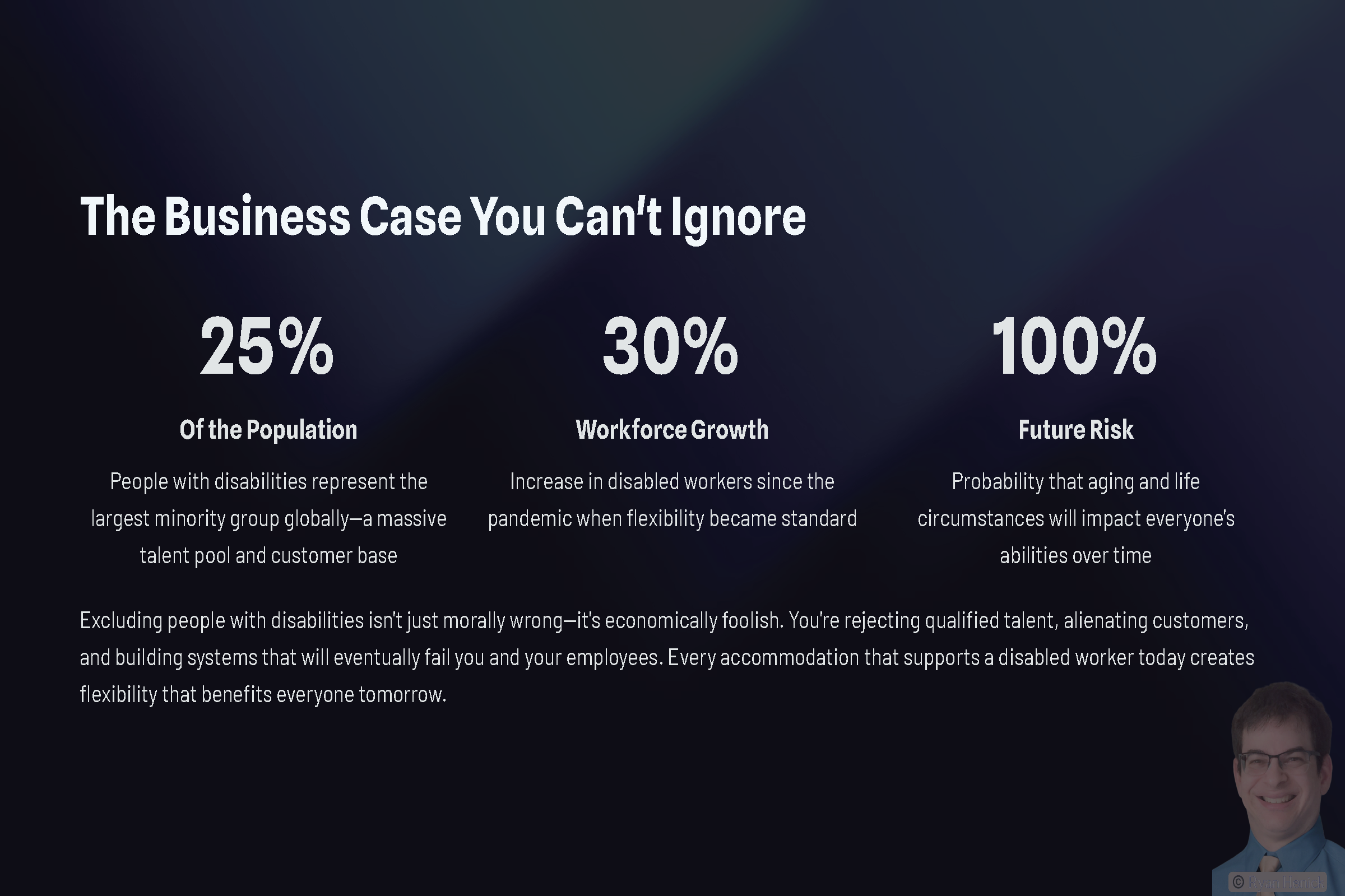
Slide titled ‘The Business Case You Can’t Ignore’ showing three statistics on disability inclusion: 25% of the population are people with disabilities, 30% workforce growth among disabled workers since the pandemic, and 100% future risk that aging or life circumstances will affect everyone’s abilities.

Inclusion isn't optional. Shocking I know.

We make up 25% of the population. We’re the largest minority in the world, and yet, every time a company “forgets” to plan for us, it’s not an oversight. It’s a decision. It’s saying: we don’t care to include a quarter of humanity.

And if you live long enough, disability will find you.

I joke sometimes that it’s like a mafia threat. “it’s coming for you.” But it’s true. We are all just temporarily pre-disabled. So when organizations treat inclusion like an experiment instead of a responsibility, what they’re really doing is gambling against their own future selves and interests.

That’s what makes the latest headlines so maddening.

Shaun Heasley, writing for Disability Scoop cites a report from SHRM noting workforce participation for people with disabilities is up 30% since the pandemic. Wendi Safstrom, president of the SHRM Foundation, calling it “a testament to what’s possible when organizations commit to inclusion and flexibility.”

She’s right. Remote work gave us the ability to get things done without burning half our energy fighting the world just to show up.

And somehow, in the same breath, SHRM handed the microphone to Robby Starbuck, a man who calls DEI “poison” and takes credit for dismantling inclusion programs at major corporations including Ford Motor Company, Harley-Davidson Motor Company, and Walmart. [H/t caroline colvin per HR Dive.]

Platforming that isn’t “viewpoint diversity.” Inclusion is not a debate topic any more than hiring women or people of color is a debate topic.

Every time an organization gives oxygen to anti-DEI voices, it tells us that our humanity is optional. And shame on any HR association that claims leadership while legitimizing that message.

Meanwhile, POLITICO reports that a federal judge had to order the White House to restore sign-language interpreters at press briefings, writing that “closed captioning and transcripts are insufficient alternatives.”

Because inclusion is optional, right?

Here’s the truth: every accommodation I’ve ever received has saved my career. I’ve spent my whole life negotiating with a body that doesn’t always cooperate. You think I can’t negotiate a work deadline? Please. I’ve been running logistics with chronic pain as a project manager my entire life.

To every HR leader who still calls inclusion a “buzzword,” you’re outing yourself as short-sighted. Inclusion isn’t charity. It’s how you tell your people they matter. It’s how you make the space you occupy, and ultimately leave on this planet better than you found it.

If your company’s culture falls apart the instant nobody's looking, or your accessibility policies look good on paper but collapse in practice, if your leaders talk about inclusion but can’t describe it without pausing to find the right words, we see you. You aren’t fooling us.

Do the right thing. Being a good human has only upsides.
Not Just a Glitch: Why Uber’s Discrimination Against Service Dog Teams Matters

In this CBS News segment, disability advocate and accessibility strategist Ryan Honick shares his personal experience with repeated Uber ride denials while traveling with his service dog, Lovey. The interview follows a new lawsuit filed by the U.S. Department of Justice against Uber, alleging widespread discrimination against passengers with disabilities who use service animals.

Yesterday, I spoke on CBS News about the U.S. Department of Justice lawsuit against Uber. I’m named in the complaint, but I’m not the story. The story is the pattern. The silence. The systems that kept letting it happen—and the people expected to endure it quietly.

Lovey isn’t a pet. She’s my Canine Companions® service dog. She’s not a “suggestion.” She’s medical equipment with a heartbeat. Legally protected. But try explaining that for the third time in one day while someone slams a car door in your face.

People have told me I look angry in my videos. And you know what? I was.
By the time I hit record, I’d often already been denied 2–3 times. I wasn’t upset about one driver. I was tired of the years of broken complaint forms and corporate PR that pretended this wasn’t happening. My tone wasn’t the problem. The problem was the pattern, and the lack of enforcement behind it.

This lawsuit is a first step. Not toward perfection, but toward truth. And that’s what we need more of: clarity, policy that works, and a whole lot less compliance theater.

So thank you to the DOJ for stepping in.

And thank you to Jennifer Williams, Elizabeth Cook, and the CBS News team for giving me space to talk about it like a whole person and not just a headline.

Because what’s at stake here isn’t just the ride.
It’s dignity. Autonomy. Access.

The Unseen Battle: Chronic Pain and the Performance of Wellness

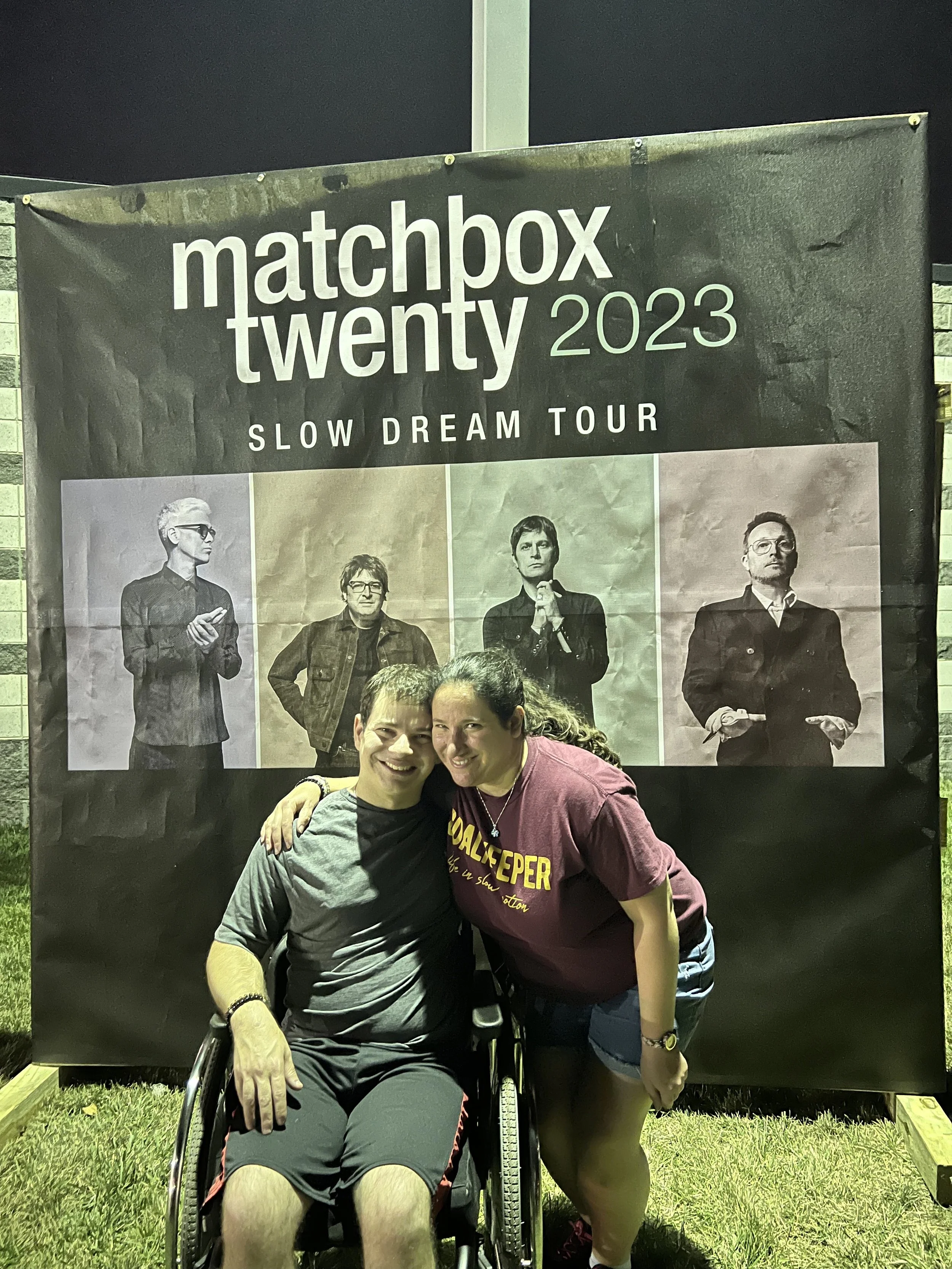
Ryan and Rachael smile in front of a Matchbox 20 Concert Poster at Jiffy Lube Live on July 27, 2023

Last night, I attended a Matchbox 20 concert at Jiffy Lube Live, an event that had been on my calendar since before the pandemic. The anticipation was high, but so was my pain. A sudden flare of chronic pain, the severity of which I hadn’t experienced in months, hit me just hours before the show. The unpredictability of disability and chronic pain is a constant reminder that it's always with us, even during our most anticipated moments.

As Brijana Prooker beautifully articulated in her POPSUGAR essay, living with an invisible illness often involves a performance of wellness. We mask our pain with smiles, energetic demeanors, and a relentless positivity that hides our suffering. We do this to make others comfortable, to fit into societal expectations of health and normalcy. But at what cost?

For years, I too performed wellness. I hid my pain behind an energetic bubbly persona, concealing my struggle from the world. But as Brijana points out, this performance can lead to further harm. "While I may have succeeded in looking healthy, it had only made me sicker," she writes. The energy we expend to appear "well" can exacerbate our conditions, leading to more pain, more fatigue, and a deeper sense of isolation.

The pressure to appear healthy extends to our social interactions. We extend visits beyond our limits, pushing through the pain to avoid disappointing others. We hide our needs, our pain, and our limitations, often at great personal cost. As Brijana explains, a casual hangout can cost us "days, possibly weeks in bed — and so many spoons, we'd have to wait until next month for them to replenish."

But it's time to break free from this cycle. It's time to prioritize our health over societal expectations and other people's comfort. It's time to make our invisible disabilities visible, to share our experiences openly and honestly. It's time to stop performing wellness and start living our truth.

As we near the end of Disability Pride Month, let's remember that our worth isn't determined by our appearance or wellness. Our worth lies in our resilience, our strength, and our ability to navigate a world that often overlooks us. Our worth lies in our authenticity, in our courage to share our stories, and in our determination to advocate for a more inclusive and understanding world.

I Spent Years Trying to Hide My Chronic Illness For Others' Comfort. No More.