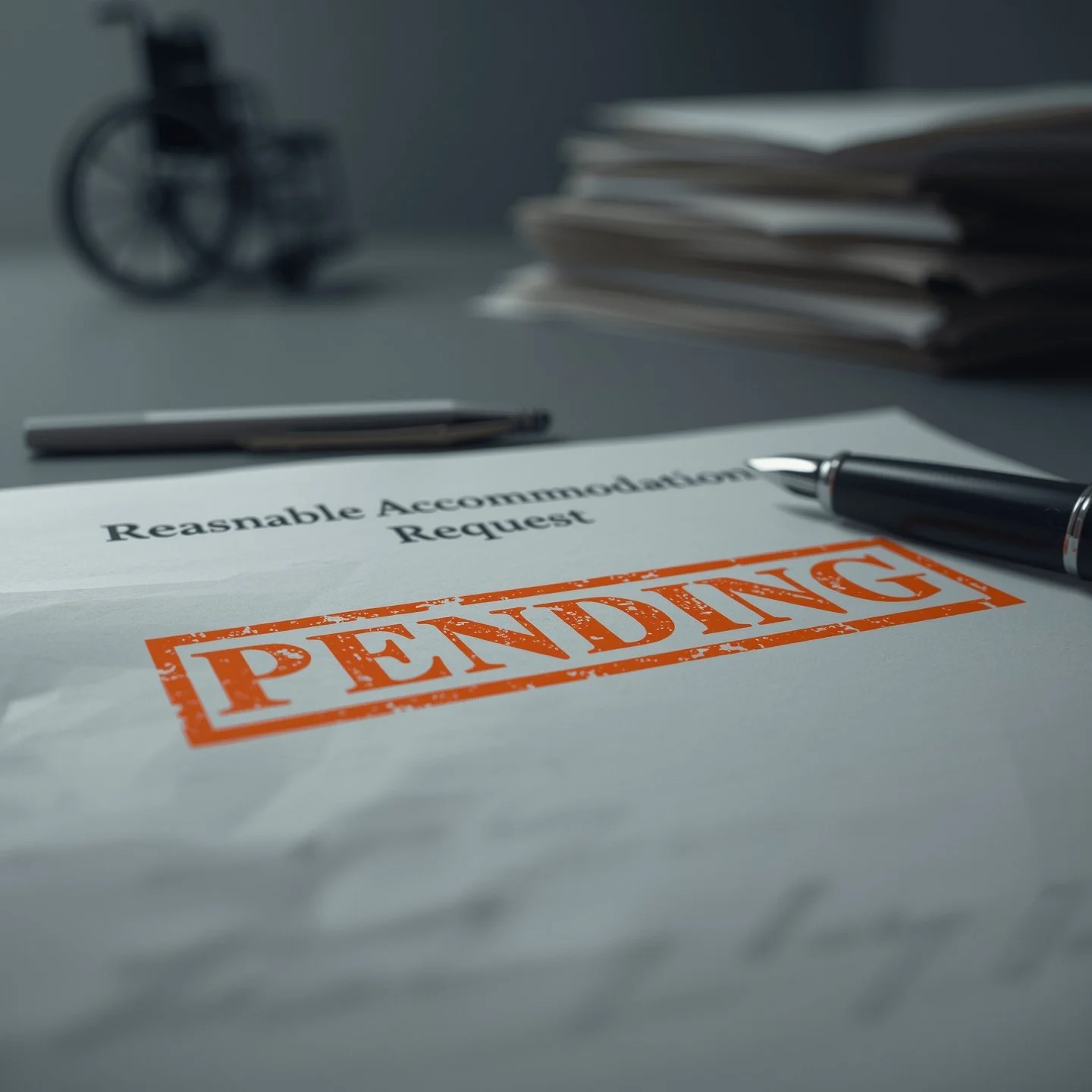
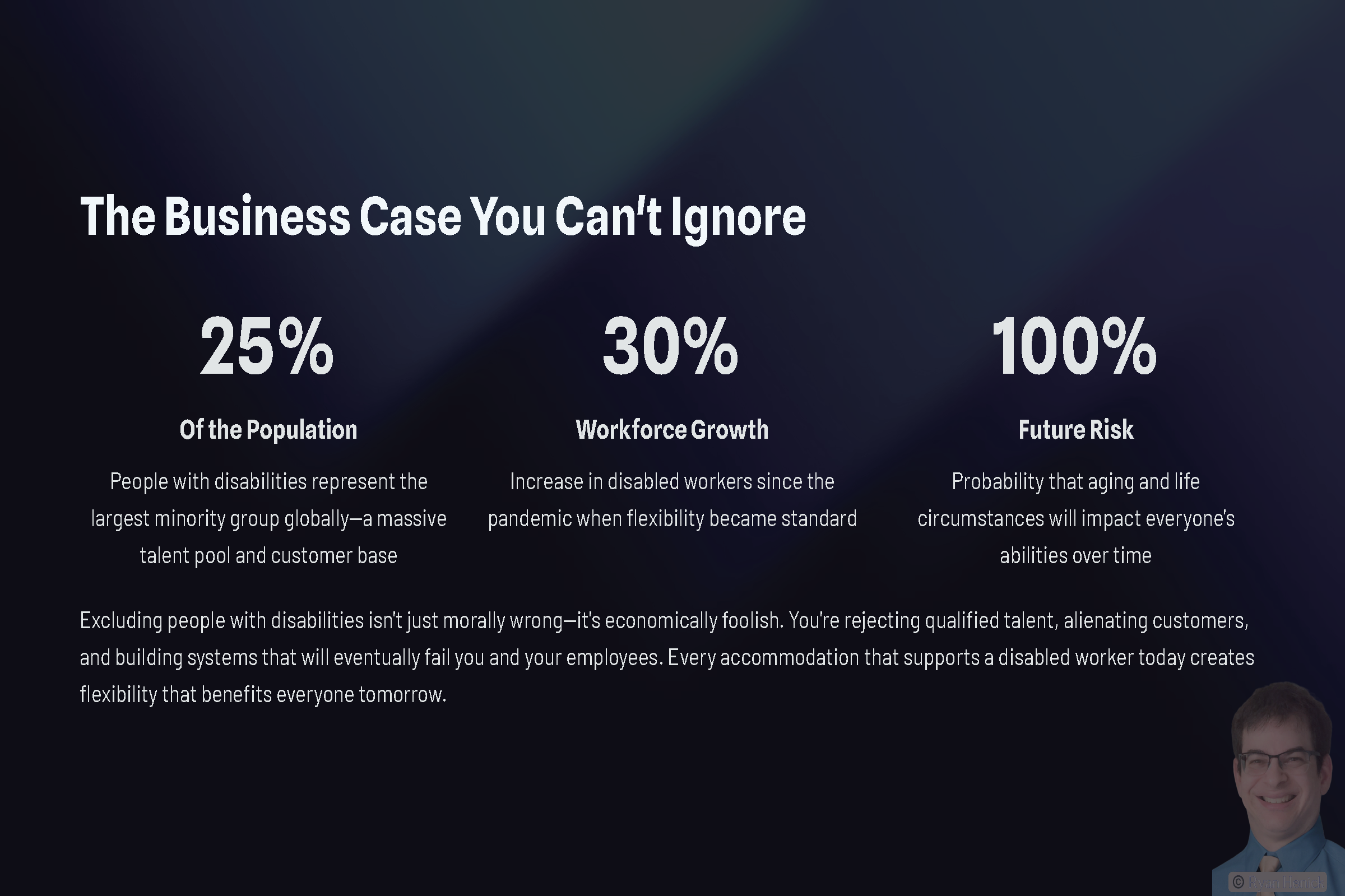
Slide titled ‘The Business Case You Can’t Ignore’ showing three statistics on disability inclusion: 25% of the population are people with disabilities, 30% workforce growth among disabled workers since the pandemic, and 100% future risk that aging or life circumstances will affect everyone’s abilities.
Inclusion isn't optional. Shocking I know.
We make up 25% of the population. We’re the largest minority in the world, and yet, every time a company “forgets” to plan for us, it’s not an oversight. It’s a decision. It’s saying: we don’t care to include a quarter of humanity.
And if you live long enough, disability will find you.
I joke sometimes that it’s like a mafia threat. “it’s coming for you.” But it’s true. We are all just temporarily pre-disabled. So when organizations treat inclusion like an experiment instead of a responsibility, what they’re really doing is gambling against their own future selves and interests.
That’s what makes the latest headlines so maddening.
Shaun Heasley, writing for Disability Scoop cites a report from SHRM noting workforce participation for people with disabilities is up 30% since the pandemic. Wendi Safstrom, president of the SHRM Foundation, calling it “a testament to what’s possible when organizations commit to inclusion and flexibility.”
She’s right. Remote work gave us the ability to get things done without burning half our energy fighting the world just to show up.
And somehow, in the same breath, SHRM handed the microphone to Robby Starbuck, a man who calls DEI “poison” and takes credit for dismantling inclusion programs at major corporations including Ford Motor Company, Harley-Davidson Motor Company, and Walmart. [H/t caroline colvin per HR Dive.]
Platforming that isn’t “viewpoint diversity.” Inclusion is not a debate topic any more than hiring women or people of color is a debate topic.
Every time an organization gives oxygen to anti-DEI voices, it tells us that our humanity is optional. And shame on any HR association that claims leadership while legitimizing that message.
Meanwhile, POLITICO reports that a federal judge had to order the White House to restore sign-language interpreters at press briefings, writing that “closed captioning and transcripts are insufficient alternatives.”
Because inclusion is optional, right?
Here’s the truth: every accommodation I’ve ever received has saved my career. I’ve spent my whole life negotiating with a body that doesn’t always cooperate. You think I can’t negotiate a work deadline? Please. I’ve been running logistics with chronic pain as a project manager my entire life.
To every HR leader who still calls inclusion a “buzzword,” you’re outing yourself as short-sighted. Inclusion isn’t charity. It’s how you tell your people they matter. It’s how you make the space you occupy, and ultimately leave on this planet better than you found it.
If your company’s culture falls apart the instant nobody's looking, or your accessibility policies look good on paper but collapse in practice, if your leaders talk about inclusion but can’t describe it without pausing to find the right words, we see you. You aren’t fooling us.
Do the right thing. Being a good human has only upsides.