
Humanity First

Inclusion Isn't A Debate: Why SHRM Got It Wrong

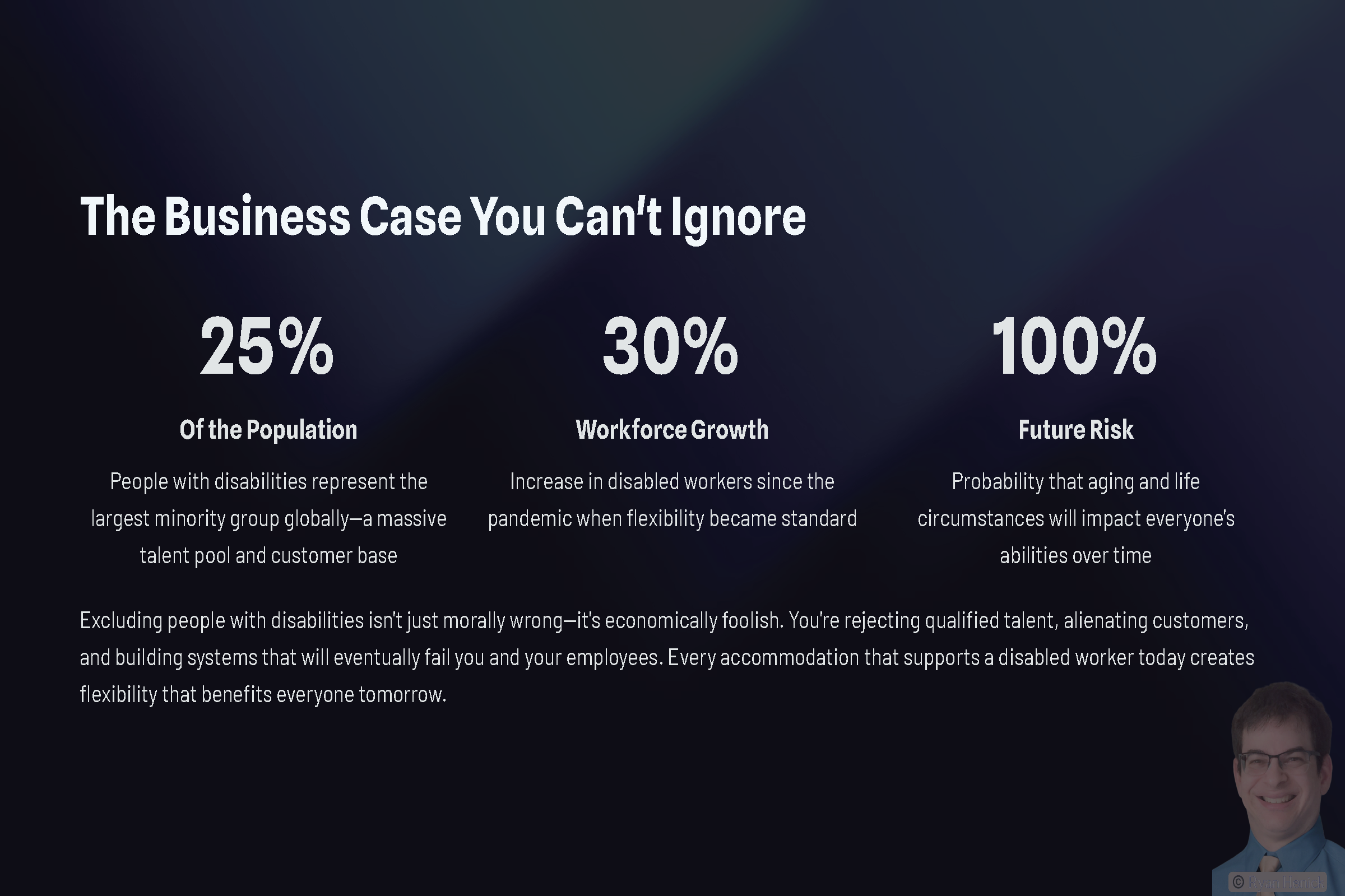
Slide titled ‘The Business Case You Can’t Ignore’ showing three statistics on disability inclusion: 25% of the population are people with disabilities, 30% workforce growth among disabled workers since the pandemic, and 100% future risk that aging or life circumstances will affect everyone’s abilities.

Inclusion isn't optional. Shocking I know.

We make up 25% of the population. We’re the largest minority in the world, and yet, every time a company “forgets” to plan for us, it’s not an oversight. It’s a decision. It’s saying: we don’t care to include a quarter of humanity.

And if you live long enough, disability will find you.

I joke sometimes that it’s like a mafia threat. “it’s coming for you.” But it’s true. We are all just temporarily pre-disabled. So when organizations treat inclusion like an experiment instead of a responsibility, what they’re really doing is gambling against their own future selves and interests.

That’s what makes the latest headlines so maddening.

Shaun Heasley, writing for Disability Scoop cites a report from SHRM noting workforce participation for people with disabilities is up 30% since the pandemic. Wendi Safstrom, president of the SHRM Foundation, calling it “a testament to what’s possible when organizations commit to inclusion and flexibility.”

She’s right. Remote work gave us the ability to get things done without burning half our energy fighting the world just to show up.

And somehow, in the same breath, SHRM handed the microphone to Robby Starbuck, a man who calls DEI “poison” and takes credit for dismantling inclusion programs at major corporations including Ford Motor Company, Harley-Davidson Motor Company, and Walmart. [H/t caroline colvin per HR Dive.]

Platforming that isn’t “viewpoint diversity.” Inclusion is not a debate topic any more than hiring women or people of color is a debate topic.

Every time an organization gives oxygen to anti-DEI voices, it tells us that our humanity is optional. And shame on any HR association that claims leadership while legitimizing that message.

Meanwhile, POLITICO reports that a federal judge had to order the White House to restore sign-language interpreters at press briefings, writing that “closed captioning and transcripts are insufficient alternatives.”

Because inclusion is optional, right?

Here’s the truth: every accommodation I’ve ever received has saved my career. I’ve spent my whole life negotiating with a body that doesn’t always cooperate. You think I can’t negotiate a work deadline? Please. I’ve been running logistics with chronic pain as a project manager my entire life.

To every HR leader who still calls inclusion a “buzzword,” you’re outing yourself as short-sighted. Inclusion isn’t charity. It’s how you tell your people they matter. It’s how you make the space you occupy, and ultimately leave on this planet better than you found it.

If your company’s culture falls apart the instant nobody's looking, or your accessibility policies look good on paper but collapse in practice, if your leaders talk about inclusion but can’t describe it without pausing to find the right words, we see you. You aren’t fooling us.

Do the right thing. Being a good human has only upsides.

The Power of Words: Trump's Harsh Views vs. Biden's Compassion

A disabled parking logo is depicted with blood dripping down, symbolizing the erroneous belief that disabled people should die. The scene is a dark and eerie, with the surrounding environment having a grim and foreboding atmosphere, including dark, leafless trees and a misty background.

I can’t stop thinking about President Biden’s address to the nation last night—his first since deciding to exit the 2024 race. His speech was filled with humanity and a focus on inclusion, qualities that starkly contrast with sentiments expressed by Donald Trump, as revealed in a recent TIME Magazine article by Fred Trump III.

Biden’s words from the Oval Office were profound: “We have to decide: Do we still believe in honesty, decency, respect, freedom, justice, and democracy? In this moment, we can see those we disagree with not as enemies but as fellow Americans.” This message of unity and respect is essential, especially as we celebrate the 34th anniversary of the Americans with Disabilities Act. The ADA, passed under the George H.W. Bush administration, is more contested than ever in today’s political climate. I’m not sure it would pass Congress in 2024.

Contrast this with the shocking statements from Donald Trump, as recounted by his nephew Fred Trump III. Fred’s article reveals a chilling disregard for disabled people. President Trump reportedly said at the height of COVID-19, “The shape they’re in, all the expenses, maybe those kinds of people should just die,” in reference to his own blood. These words are not just hurtful; they are a stark reminder of how far we still have to go in fighting for the rights and dignity of all Americans.

Biden’s commitment to disability rights has been evident throughout his administration. His support for updates to Section 508 of the Rehabilitation Act is a critical step forward. “The federal government has an obligation to ensure that its services are accessible to people with disabilities, including its websites and technology,” said Senator Bob Casey, co-sponsor of the proposed updates. This legislation aims to make federal technology accessible to all Americans, ensuring that no one is left behind.

I use a wheelchair. I handle a service dog. I leverage assistive technology to navigate the web due to my visual impairment. These updates are not just necessary; they are vital. It’s not just about physical barriers; it’s about breaking down attitudinal ones as well.

Biden’s words remind us that we are all in this together: “We are a great nation because we are a good people...The power’s in your hands. The idea of America lies in your hands. You just have to keep faith.” In contrast, Trump’s comments reflect a divisiveness that undermines the progress we’ve made and the values we stand for.

As we approach this significant anniversary of the ADA, let’s remember the work that still needs to be done. Let’s continue to fight for a world where everyone, regardless of their abilities, has equal access to opportunities and resources. When given the respect and dignity we deserve, we not only thrive, we persevere. The only thing that needs to die is ableism.

My Uncle Donald Trump Told Me Disabled Americans Like My Son ‘Should Just Die’